

Commercial Flooring UAE: Materials, Performance and Specification Guide
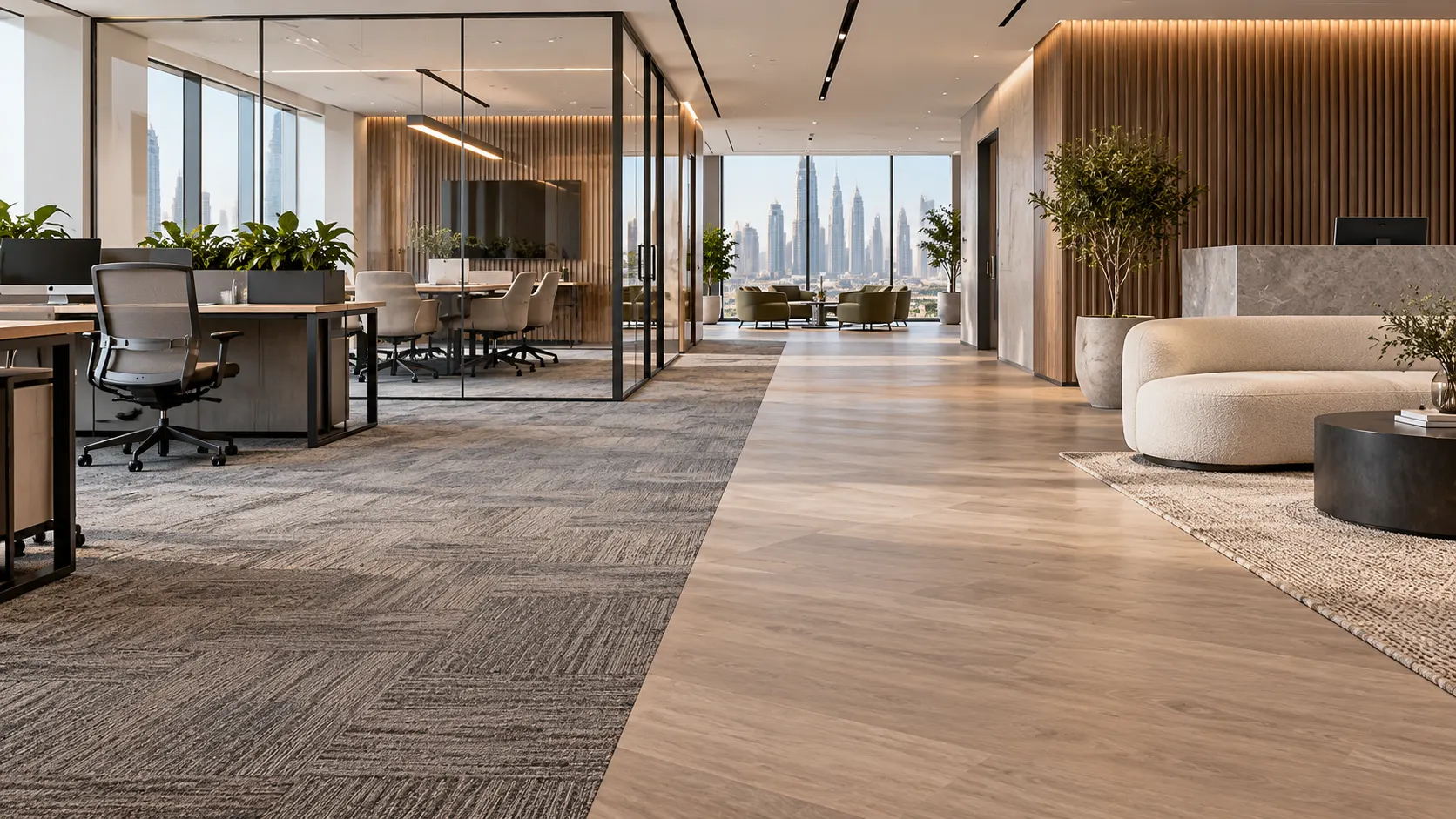
Choosing the right commercial flooring in the UAE is about more than appearance. Office floors must manage constant foot traffic, rolling chairs, cleaning, moving furniture, and acoustic requirements. Based on our experience delivering workplace flooring solutions across the UAE, one common mistake is adopting the same flooring specification across every space. Reception areas, corridors, meeting rooms, and workstations all have varying performance requirements. An effective workplace flooring solution should balance durability, acoustics, maintenance, installation requirements, and long-term cost.
Choosing Commercial Flooring for UAE Offices Can Rely On
For most workplaces, carpet tiles and LVT are among the most practical options.
Commercial Carpet Tiles
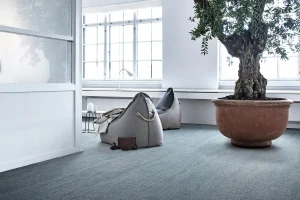
Commercial carpet tiles are ideal for open office spaces, meeting rooms, and workstation areas. They help to absorb sounds, improve underfoot comfort, and permit each damaged section to be replaced separately. When choosing a commercial office carpet, we consider pile density, backing stability, wear classification, and maintenance requirements, rather than color alone. Dense, low-profile carpet tiles are often more effective in high-traffic areas than soft, high-pile choices.
LVT Flooring for High-Traffic Areas
LVT flooring is popular in receptions, breakout areas, and circulation zones due to its durability and ease of maintenance. Transitions between LVT and carpet require careful planning in high-traffic areas to ensure a safe and seamless finish.
Improper coordination of floor heights can lead to an uneven floor transition, resulting in finish level discrepancies and potential trip points. The thickness of both materials should therefore be examined before installation. In high-traffic commercial flooring, wear layer quality and subfloor preparation are as critical as surface design for ensuring long-term flooring performance and durability.
Acoustic Flooring Underlay
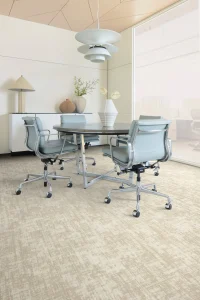
Acoustic flooring solutions are particularly valuable in open-plan offices and meeting spaces, helping reduce footfall noise and improve workplace comfort. The most effective acoustic underlay is determined by verified sound reduction performance, flooring compatibility, and practical maintenance requirements rather than thickness alone. Lower-cost underlays may reduce initial spend, but commercial-grade systems often provide better long-term performance.
Raised Access Flooring
Raised access flooring is widespread in offices throughout Dubai and Abu Dhabi because it makes power and data connections more accessible. LVT can be installed over raised access flooring, provided the panels are properly aligned, stable, and prepared. Uneven or shifting panels may result in joints becoming visible over time. Before installing raised access flooring, ensure that the panel alignment and stability are correct. A pretreatment layer may be needed if the surface is uneven.
Evaluating Long-Term Flooring Performance
Both materials can provide good long-term value if properly specified. Commercial carpet tiles can last seven to ten years or more, though busy routes may necessitate more frequent replacements. Good-quality glue-down LVT can last ten years or more, depending on traffic, wear layer, installation, and maintenance. Carpet tiles have an advantage in situations where there is localized damage since individual parts can usually be replaced rapidly.
Practical Buying Considerations
Beyond durability and maintenance, several practical factors should be assessed before selecting an office flooring solution.
- Daily traffic
- Rolling-chair use
- Acoustic requirements
- Cleaning routines
- Raised-floor access
- Installation downtime
- Expected refurbishment cycle
The cheapest flooring at the installation stage is not always the lowest-cost option over its full lifespan.
Common Mistakes to Avoid
Common mistakes include selecting residential-grade flooring, ignoring underfloor preparation, and failing to anticipate transitions between materials. Another issue we frequently encounter is that one flooring material is designated across the business, even when various areas have extremely varied traffic and maintenance requirements.
Expert Recommendations
Carpet tiles are a sensible alternative for open-plan offices that require good acoustics and comfort. Commercial LVT is frequently more suited for reception areas, breakout areas, and spaces that require easy cleaning. The most effective commercial flooring specification aligns material selection with traffic levels, acoustic requirements, maintenance expectations, subfloor conditions, and the long-term needs of the workplace.
